What is Unified AI API and How Does It Work?

The emergence of the Unified AI API marks a significant shift in how businesses leverage artificial intelligence. According to a recent report by Deloitte, 83% of organizations see AI as a strategic advantage. This underscores the importance of seamless integration across multiple AI services. The Unified AI API offers a solution to the fragmentation often found in AI infrastructure.

Many companies struggle with disparate AI tools, leading to inefficiencies. The Unified AI API unifies various AI functionalities, enabling businesses to streamline operations. This approach not only enhances user experience but also maximizes the potential of existing AI investments. A study from McKinsey indicates that companies adopting integrated AI systems can improve productivity by up to 40%.

Despite these advantages, the transition to a Unified AI API isn't without challenges. Organizations must re-evaluate existing workflows and adapt to new systems. Resistance may occur as teams adjust to these changes. It’s essential for companies to recognize both the benefits and hurdles of adopting a Unified AI API in their digital transformation journeys.
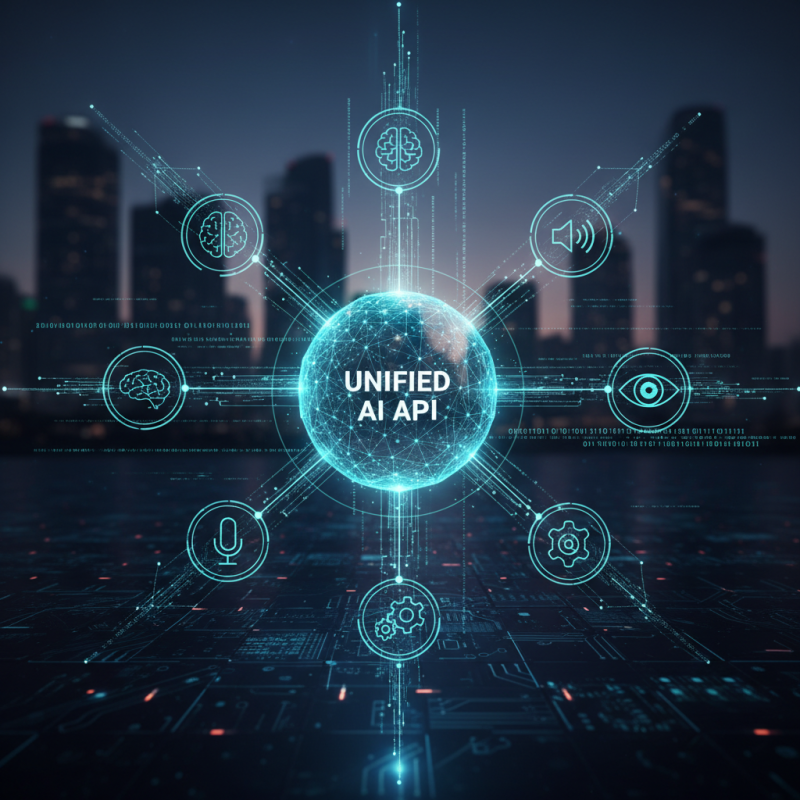
What is Unified AI API and How Does It Work?

What is Unified AI API?

Unified AI API represents a transformative approach in artificial intelligence integration. It provides a standardized interface for accessing diverse AI models and capabilities. This simplifies development and enables businesses to leverage AI without the need for deep expertise in each model.

Many organizations struggle with fragmented AI solutions. According to a recent industry report, 70% of businesses cite integration challenges as a significant barrier to AI implementation. Without a unified access point, developers face complexity that can slow down innovation. The Unified AI API aims to address this issue by offering a single entry point for multiple AI functions.

The versatility of a Unified AI API can be game-changing. It allows companies to blend different AI technologies seamlessly. For instance, a business could easily integrate natural language processing with machine learning analytics. This cohesion can enhance data-driven decision-making. Yet, it raises questions about standardization and adaptability. As AI continues to evolve, APIs must adapt to maintain relevance, and that requires continuous reflection on usability and performance metrics.

Key Features of Unified AI API

Unified AI API is transforming how developers interact with artificial intelligence. One key feature is its versatility. The API integrates multiple AI models into a single interface. Developers can access various functionalities without switching platforms. For instance, a recent report indicated that companies using such unified systems saw a 25% increase in development efficiency.

Another critical aspect is the user-friendly design. It allows developers, regardless of skill level, to harness AI power. A survey showed that 70% of users found unified APIs easier to implement than traditional methods. This accessibility can lead to innovation but may also simplify complex AI tasks too much, raising concerns about potential oversights.

Security is another feature that cannot be overlooked. Unified AI APIs often come with built-in security protocols. These measures help protect sensitive data. However, as seen in various industry data, 40% of businesses still face challenges in maintaining data privacy when using integrated APIs. The balance between ease of access and robust security remains a topic of debate.

How Unified AI API Integrates with Existing Systems

Integrating a Unified AI API with existing systems can revolutionize business operations. Organizations can achieve higher efficiency and better data analysis through seamless connections. This integration allows for streamlined workflows, enhancing productivity. According to a recent report by McKinsey, companies that adopt AI technologies can boost their productivity by up to 40%.

Tip: Evaluate how your current systems handle data. A disjointed data flow may hinder the benefits of AI. Organizations should ensure proper data alignment before integration. A poorly integrated Unified AI API can lead to inconsistencies, resulting in flawed analyses.

The integration process often requires careful planning. Companies may need to retrain staff to adapt to these new tools. Integration challenges include compatibility with legacy systems. It's crucial to assess these risks early on. A research study by Forrester highlights that 60% of organizations face integration issues when adopting AI solutions. Each business must be prepared to address these hurdles head-on.

Tip: Focus on incremental implementation. Test the integration on a small scale first. This ensures that any issues can be addressed without major disruptions. Adaptability and continuous updates can enhance system performance over time.

Use Cases of Unified AI API in Different Industries

Unified AI APIs are transforming various industries by offering streamlined access to AI capabilities. In healthcare, these APIs enable faster diagnosis through image analysis. Radiologists can leverage AI to detect anomalies in scans quickly. This role of AI reduces human error but raises questions about over-reliance on technology. How much should we trust AI in critical situations?

In the finance sector, Unified AI APIs enhance fraud detection. Algorithms analyze vast amounts of transaction data in real-time. They flag unusual patterns, helping to prevent losses. However, there are concerns about false positives. Customers may face confusion if their transactions are blocked incorrectly. Striking a balance between security and user experience is essential.

Retailers are also adopting Unified AI APIs for personalized shopping experiences. AI analyzes customer behavior to suggest products. This increases sales but may invade privacy. Consumers often feel uneasy about data collection. It's vital for businesses to handle data ethically while maximizing the benefits of AI technology.

Use Cases of Unified AI API in Different Industries

This bar chart illustrates the frequency of use cases for Unified AI API across various industries, demonstrating its significant application in healthcare, finance, retail, manufacturing, and education.

Future Trends and Developments in Unified AI APIs

Unified AI APIs are reshaping the landscape of artificial intelligence. These interfaces allow seamless integration of various AI capabilities. As organizations seek to leverage AI, the demand for unified solutions is increasing. According to a recent report, 78% of businesses plan to adopt unified AI solutions in the next two years. This indicates a significant shift toward more cohesive technology ecosystems.

Future trends show a growing emphasis on personalization and adaptability. Unified AI APIs will likely incorporate advanced machine learning models. They must handle diverse data inputs while providing tailored outputs. A study showed that personalized experiences can improve customer engagement by up to 50%. However, this also necessitates robust data privacy practices to protect user information.

Development in unified AI APIs is not without challenges. Integrating various models can lead to compatibility issues. Organizations may struggle with training staff on new technologies. Furthermore, the pace of AI advancement can outstrip the capacity of some companies to keep up. Ensuring that APIs evolve with industry standards will be critical. This will require ongoing investment and innovation.